Coding|10 April 2024
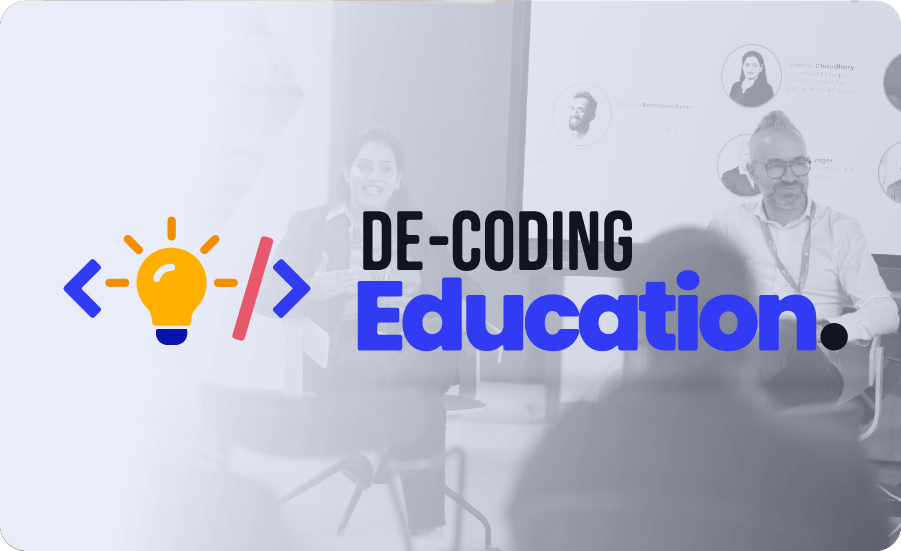
It’s been a few weeks since we held our 3-Day Thought-Leadership series, titled “De-Coding Education”, conducted across three Emirates in the UAE. This series aimed to discuss the current position of the education system and the urgency with which we need to change it to allow students to better adapt to the rapidly changing world. Upon reflecting on the insights received from the representatives of nearly 30 schools, it's clear that we're at a pivotal moment in the evolution of education.
The event was a resounding success, particularly due to the stellar line-up of industry experts, brought in from across the globe, to discuss how all stakeholders in the education system could become advocates of change. Insights from luminaries like Dr. Adam Pantanowitz highlighted the importance of fostering innovation and cultivating soft skills like problem-solving in our students. His poignant question, "Who put us in the box in the first place?" challenges us to reconsider the traditional boundaries of education, and try to understand why the system is built the way it is.
A sher Marcus of Hubo Design echoed similar sentiments, highlighting the critical role of the learning environment in nurturing creativity. Schools structured akin to hospitals or prisons, in his expert opinion, hinder children's ability to think innovatively. It was refreshing to note, however, that schools are starting to not only recognise this but are swiftly moving towards creating spaces that are not just functional but inspire creativity.
Jurie de Jager of Curro Holdings shared actionable strategies for scaling future-focused subjects like Coding and Robotics in schooling groups, emphasising the need to empower children as agents of change. His powerful insights left the audiences eager for more, even after the events drew to a close.
Sheillie Chaudhary, the innovative and forward-thinking Assistant Principal of GEMS Cambridge Sharjah underscored the transformative potential of technology in shaping the next generation of problem solvers. She highlighted that it is not just about buying pieces of technology, but how technology is used to draw and hold students' attention and open up their minds to thinking in different ways.
Rajesh Pasungili Ramakrishnan, drawing from his extensive experience working with schools globally, emphasised the urgency of reforming education to bridge the growing gap between traditional teaching methods and sharing insights into how Resolute Education is working to meet the demands of a rapidly evolving world.
The underlying theme, upon reflecting on the wealth of insights, and the feedback from many attendees is clear: The status quo is no longer sustainable and needs to be challenged. Matt Tompkins put it quite eloquently: “The world has enough caretakers; it needs changemakers.”
The next generation of problem-solvers holds great promise, and it's our collective responsibility to create spaces, and tools to nurture their potential and prepare them for the challenges ahead.