Foundation|05 August 2024
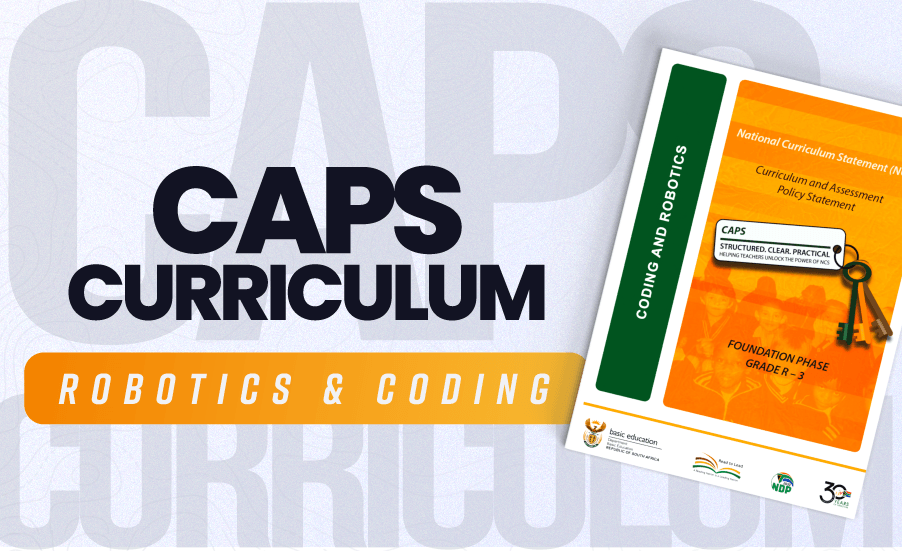
The South African Curriculum and Assessment Policy Statement (CAPS) for the Foundation Phase has recently made it mandatory to include coding and robotics as compulsory subjects for our youngest learners. This pioneering move aims to equip learners from Grades R to 3 with important computational thinking and problem-solving skills. While the integration of this new subject might seem like a major shift, comprehensive support systems are in place to facilitate a seamless transition.
Grade R to Grade 2 will have 1 hour per week dedicated to coding and robotics, while Grade 3 will have 2 hours per week. The curriculum enhancement focuses on three main pillars: Coding, Robotics, and Digital Concepts. These components are designed to develop foundational skills in computational thinking, problem-solving, and digital literacy, which are essential in today’s technology-driven world.
In the Foundation Phase, the emphasis is on unplugged programming. This approach teaches the fundamental concepts and principles of computational thinking and coding without the need for computers or digital devices. It’s an effective method for introducing young learners to these critical skills, laying a strong foundation for more advanced digital learning in future grades.
To support educators in implementing these concepts, several practical resources and activities are suggested:
While the core activities remain unplugged, optional digital enhancements can enrich the learning experience. Tools such as the Novi app are great for integrating digital elements into the learning process without overwhelming young learners. Programmable educational robots can offer a more tactile coding experience, reinforcing the concepts learned. Digital simulations can serve as an additional resource, particularly when physical robots are not available.
Download the Novi App here:
To further enrich the coding and robotics curriculum, consider integrating learners acting as robots using simple props to simulate robots demonstrating basic coding instructions through physical movements. Utilise everyday items to create engaging and imaginative coding problems for learners to solve.
While adapting to the new coding and robotics curriculum may initially seem challenging, it presents an opportunity to significantly enhance educational outcomes. By equipping our learners with early skills in these critical areas, we prepare them for a future where digital literacy and problem-solving are paramount. For additional support or to access our resources, please feel free to reach out to Resolute Education. Let’s embark on this transformative educational journey together, ensuring a bright and innovative future for all our Foundation Phase learners.